
Headsets and speakers: The Battle of the Monitors
Is there a difference between monitoring with your home studio speakers or headphones? What does it mean when they put the word “Professional” next to the model name of the headset or speakers?
Both questions may or may not be answered in this article. They say the human ear can hear 20 Hz to 20 kHz. Whenever an engineer is producing the song, a lot of the time is actually spent listening to the song. The music engineer spends their time focusing on bringing out the best quality of the sound of the song while cutting out and eliminating the unwanted noise. The engineer hears the rawest form of the song. One of the first tasks is cutting low frequencies starting at 22hz, or cutting frequencies too high. During the mid-range portion of the audio, there are distortions that can be clipped out by dipping the eq range. In order to hear this, it takes a considerable amount of time or a trained ear that can pan across the eq band and find the distortions.
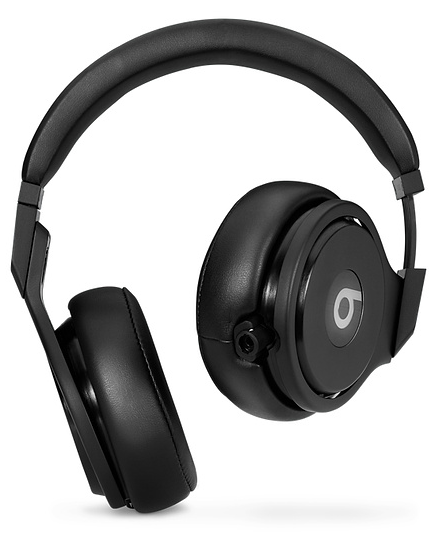
Headphones give engineers that closed in focus by the closed back of the headset that covers the ear. The closed back silences everything around you and isolates just the sound you want to hear. Speakers on the other hand provide you that genuine live experience. Speakers allow you to hear the song as you would hear it as the fan/audience first listening to it. After all, music engineers are fans themselves. So which is right?
I’m sure there are plenty of articles on the web that address this but what out does the other? From my standpoint I would say use the headphones initially to clean up the individual audio tracks, and use the speakers once you are ready to level out and balance all the instrumentals and vocals together. Some may do the opposite and use the speakers to get the basic volume levels down, and then dive in deep with the headphones for specific sound ranges you have problems with.
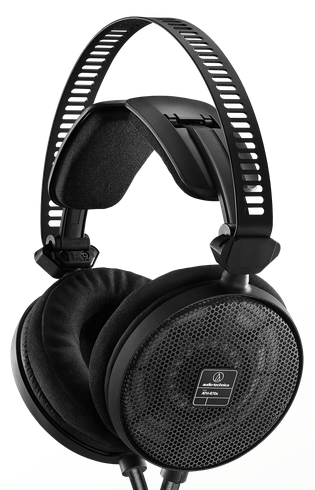
For headphones, it's easy to want to get the Beats by Dre and it's a sure thing to want to get a Shure in any device they make. In fact, I recorded several songs using both Dre headphones and a Shure mic while in the studio. Both have become industry standard. But when you throw Pro in the mix, you are looking at a more hefty product. There are a lot more detailed components of the device. Beats Pro over-ear headphones are sold on Mac for $400. Whereas the Shure SRH440 Professional Studio Headphones goes for $99 on their site. Wait both have the word Pro in it. To be fair, Shure also sells SRH1840 Professional Open Back Headphones for $500 which is $100 more than Beats Pro. You can find the Audio-Technica ATH-R70x Professional Open-Back Reference Headphones for $350.
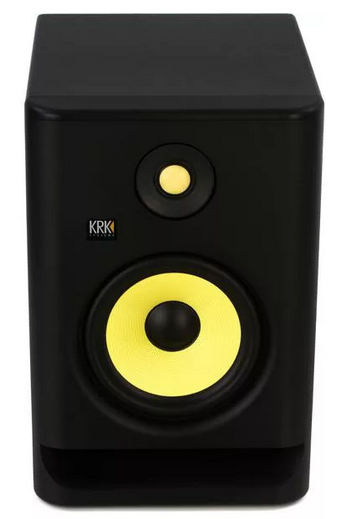
There are only 3 speakers that come to mind for home studio use and those are the KRK, JBLs and the Yamaha. The KRK ROKIT has been the go-to for most home studios. I’ve been in home studios where I could hear my music clear and feel the base as it was meant to be. The JBL speakers are known for their clarity such as the 305P MkII. The Yamaha HS series is a known good product. The name alone should tell you they have a studio standard device much like Shure. Of course there are other not so familiar big name products out there, but usually consumers go with the name they can trust. However, sometimes taking risk on lesser known products can be a pleasant surprise and actually more affordable.
Ultimately, the idea is to find what you are comfortable with and what adds value to your studio production. In a world where, louder seems better, you have to cut through some of the noise. What I found is that if you are in a dense population and close neighbors, you may want to jam with your earphones on. If you are afforded space, soundproofing and a quiet place to perform, speakers might do you justice. Speakers give you the feel for the song, while headphones provide the clarity you need to make appropriate adjustments. What I found was the best poor man's monitoring is to bounce the track and hop in your ride and see if your track has that “Cruise-ability.” If it does, then you might have a hit.
Posted, 9 Oct 20